
Last reviewed and updated: 2026-09-20
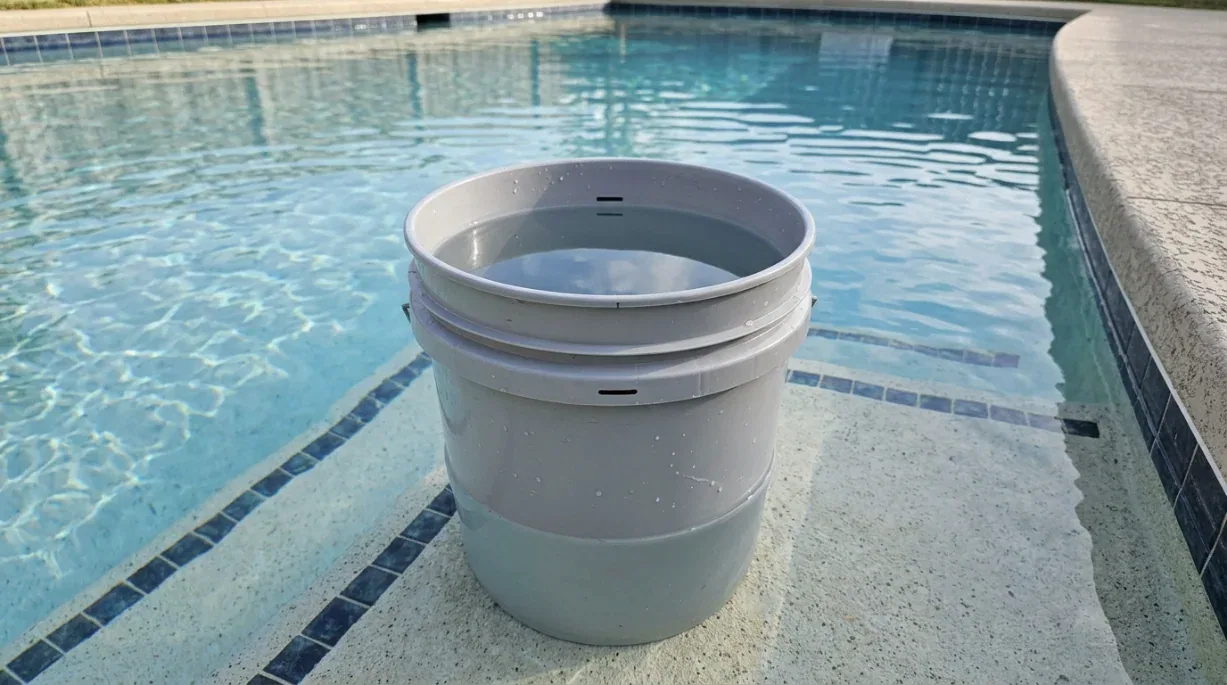
A Marietta pool losing roughly a quarter to half an inch a day in summer is almost certainly normal evaporation. Consistently more than that indicates a leak. The bucket test settles it by comparing the pool's loss with a bucket of water exposed to the same conditions. Whether the loss changes when the pump is running then points to which part of the system is at fault, and pool leaks are located with pressure testing, dye testing and listening equipment, without draining the pool.
Where to start
- Run the bucket test first: it is free and it separates evaporation from a real leak
- Note whether loss changes with the pump running: this is the single most useful diagnostic clue
- Check the equipment pad for damp ground, dripping unions or a wet filter area
- Look for soggy ground or settling around the pool shell and along the plumbing runs
- Watch for air bubbles returning through the jets, which suggests a suction-side leak
- Record your pool volume: Cobb County requires it for a pool-related leak credit
What the pump tells you
Unlike a slab leak, a pool leak gives you a free diagnostic before anyone arrives: the pump tells you roughly where to look.
| When the loss is worse | What it usually points to |
|---|---|
| Only when the pump is running | Pressure-side plumbing: return lines under pressure, pushing water out through a break |
| Only when the pump is off | Suction-side plumbing, or the shell: water drains out under gravity once pressure stops |
| Constantly, at the same rate | The shell itself, or a fitting at or below the water line |
| Stops at a specific level | The leak is at that level: often the skimmer throat, a light niche or a tile line crack |
| Air bubbles from the returns | Suction-side leak drawing air into the system |
How pool leaks are located
- Establish the loss rate. The bucket test quantifies real loss against evaporation over 24 hours.
- Isolate plumbing from shell. Pressure-testing each plumbing run independently establishes whether any of them lose pressure.
- Test the usual suspects. The skimmer throat, light niche, main drain, returns and steps account for most shell-side leaks.
- Dye test. With the pump off and the water still, dye released near a suspected crack or fitting is drawn visibly into the leak.
- Listen. Hydrophones and listening equipment locate pressurised plumbing leaks beneath the deck without excavation.
Pool leaks and your water bill
Pool work is priced separately from general leak detection in Marietta, GA, because the method set is different: see what leak detection costs here.
A pool with an automatic fill valve hides its own leak: the level stays perfect while the water bill climbs. If your pool level never changes but the bill has risen, check the auto-fill.
Cobb County Water System does allow leak credits for pool leaks, with one extra requirement: pool claims must include the pool volume alongside the usual account details, explanation of the leak and proof of repair.
Frequently asked questions
Is my pool leaking or just evaporating?
Losing roughly a quarter to half an inch a day in summer is normal evaporation in this climate. Consistently more than that suggests a leak. The bucket test confirms it: a bucket of water placed on a pool step loses water to evaporation at the same rate as the pool, so if the pool drops faster than the bucket, you have a leak.
How do I do the bucket test?
Fill a bucket with pool water and set it on a step so the water inside sits at roughly the same level as the pool. Mark the water level inside and outside the bucket. Leave the pool running normally for 24 hours, then compare. If the pool level dropped more than the bucket level, the difference is your leak.
Does my pool leak more when the pump is on or off?
That difference is the most useful clue available. Worse with the pump running points to pressure-side return plumbing. Worse with the pump off points to suction-side plumbing or the shell. A constant rate regardless of the pump points to the shell or a fitting.
Can a pool leak be found without draining the pool?
Yes, and it usually is. Plumbing runs are pressure-tested individually, dye testing identifies shell and fitting leaks with the water still, and listening equipment locates pressurised leaks under the deck. Draining a pool to look for a leak risks structural damage and is rarely necessary.
Where do pool leaks most often occur?
The skimmer throat, the light niche, the main drain, return fittings, the steps, and the plumbing runs under the deck. If the water stops dropping at a particular level, the leak is at that level, which narrows it considerably.
My pool level never drops but my water bill is high. Why?
Almost certainly an automatic fill valve masking a leak. The auto-fill keeps topping the pool up, so the level looks perfect while the water passes through your meter continuously. Turn the auto-fill off and run the bucket test.
Does Cobb County give a water bill credit for a pool leak?
Yes. Pool leaks qualify, with one extra requirement: the claim must include the pool volume in addition to your account details, an explanation of the leak, and a repair receipt, parts receipt or letter explaining what was done.