
Last reviewed and updated: 2026-09-20
Leak detection is the process of pinpointing a hidden water, sewer, gas or pool leak without tearing up your home first. In Marietta, GA a professional uses acoustic listening equipment, thermal imaging, pressure testing and tracer gas to narrow a leak to within a few inches, then marks the spot so only that small area has to be opened. Most Marietta homeowners call after one of three things happens: a water bill jumps for no reason, they hear running water when everything is off, or a warm or damp patch appears on the floor.
Key facts for Marietta homeowners
- Two different water utilities serve this area. Homes inside the city are billed by Marietta Power & Water; most of the surrounding area is billed by Cobb County Water System. They have separate leak credit policies with separate paperwork.
- Cobb County offers a partial leak credit once per rolling 12-month period, covering no more than two affected months, and it requires proof that the leak was repaired.
- Detection and repair are usually priced separately. A diagnostic visit locates the leak; the repair is quoted afterwards once the cause is known.
- Cobb's housing stock matters. Large parts of Marietta were built between the mid-1970s and mid-1990s, which is the polybutylene era and the era of copper supply lines run through and under slabs. Both fail in predictable ways.
- Detection is almost always cheaper than guessing. Opening a slab, a wall or a yard in the wrong place costs more than the diagnostic that would have avoided it.
Do you actually have a hidden leak? The 20-minute meter test
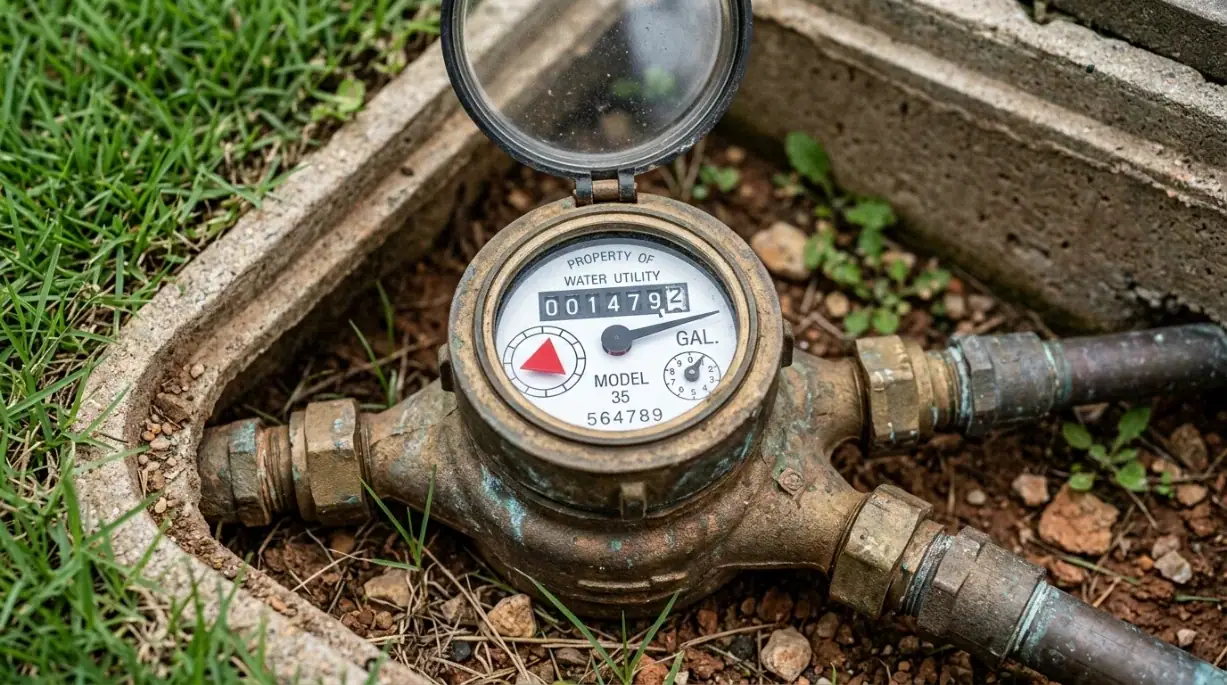
Before anyone comes out, you can confirm a leak yourself with the water meter test. Every water meter in Marietta and Cobb County has a low-flow indicator, usually a small triangle, star or dial that spins when even a trickle of water is moving through the meter. If it moves while nothing in the house is running, water is escaping somewhere between the meter and your fixtures.
- Turn everything off. No taps, no dishwasher, no washing machine, no icemaker, no irrigation. Do not flush a toilet for the duration of the test.
- Find the meter. It is usually in a covered box near the street or the kerb line at the front of the property.
- Watch the low-flow indicator. If the small triangle or dial is turning at all, water is flowing. A fast spin means a significant leak; a slow creep still adds up to thousands of gallons a month.
- Write down the meter reading, then wait. Leave the house untouched for one to two hours and read it again. Any change with everything off confirms a leak.
- Narrow it to inside or outside. Close the main shut-off valve where the supply enters the house, then re-check the meter. Still moving means the leak is between the meter and the house, a service line or irrigation problem. Stopped means the leak is inside or under the house.
Rule out the cheapest cause first. A silently running toilet flapper is the single most common reason for a mystery water bill, and it is a few dollars to fix. Put a few drops of food colouring in the tank, wait twenty minutes without flushing, and check the bowl. Colour in the bowl means the flapper is leaking.
Signs of a hidden leak in a Marietta home
Hidden leaks rarely announce themselves with an obvious puddle. These are the symptoms that most often turn out to be a real leak:
| What you notice | What it usually means | Urgency |
|---|---|---|
| Sound of running water when nothing is on | Pressurised supply line leaking, often under the slab or inside a wall | High |
| A warm or hot patch on the floor | Hot water line failing under the slab | High |
| Water bill doubled with no change in usage | Service line, irrigation, slab or toilet leak | High |
| Sudden drop in water pressure | Significant supply line leak losing volume before it reaches fixtures | High |
| Damp carpet or buckling floor with no visible source | Slab leak or a drain line failure under the floor | High |
| Musty or mildew smell in one room | Long-running concealed leak behind a wall or under flooring | Medium |
| A patch of yard that stays green, soft or soggy | Service line or irrigation leak underground | Medium |
| Cracked tile, lifting hardwood, or a hairline crack in the slab | Water moving under the foundation | High |
| Pool level dropping faster than the rest of the neighbourhood | Pool shell, plumbing, skimmer or light niche leak | Medium |
| Sewer or sulphur smell indoors with no visible cause | Cracked drain line or dry/failed trap below the floor | Medium |
The types of leaks found in Marietta homes
Slab leaks
A slab leak is a break in a water line running through or beneath the concrete foundation. In this part of Georgia they most often show up in homes built from the 1960s through the 1980s, where copper supply lines were run under the slab. Copper in direct contact with concrete and soil corrodes from the outside in, and the resulting pinhole can run for months before anyone notices. The classic signs are a warm spot on the floor, a running-water sound with everything off, and a water bill that climbs steadily rather than all at once.
Water service line leaks
The service line is the buried pipe carrying water from the meter at the street to your house. Everything on your side of the meter is your responsibility, which is why a service line leak can produce an enormous bill with nothing visible indoors. Signs include a soggy strip of lawn, a section of grass that is greener than everything around it, water surfacing at the kerb, or a meter that keeps moving even with the main house valve closed.
Pool leaks
Pools lose water to evaporation, so the question is always whether the loss is normal. Losing roughly a quarter to half an inch a day in summer is typically evaporation. Consistently more than that, or loss that changes depending on whether the pump is running, points to a leak: in the shell, the skimmer, the light niche, or the pressure and return plumbing. The bucket test separates the two, and pool leak detection then isolates plumbing from shell.
Gas leaks
Natural gas leaks are a safety emergency, not a diagnostic project. If you smell the rotten-egg odorant, hear hissing near a line or appliance, or feel lightheaded, leave the building immediately, do not switch anything electrical on or off, and call 911 and your gas utility from outside. Detection work happens only after the line is made safe.
Sewer and drain line leaks
Drain lines are not pressurised, so they leak only when water is flowing through them. That makes them harder to find and means they are often diagnosed with a camera inspection or a smoke test rather than acoustic listening. Cobb's mature tree canopy is a factor here: root intrusion into older clay and cast iron laterals is common across Marietta.
Irrigation leaks
Irrigation systems sit on the house side of the meter but run underground, on a timer, often at night. A cracked lateral or a valve that fails to fully close can waste thousands of gallons before anyone sees a symptom. If your meter keeps moving with the house main closed but the irrigation supply open, the system is the first place to look.
Polybutylene failures
Polybutylene supply pipe, grey, and sometimes blue for exterior runs, was installed widely in Georgia between roughly 1978 and 1995, which covers a large share of Marietta's housing stock. It degrades from the inside and fails without warning, often at the fittings. A polybutylene home with a leak has a different decision to make than a copper home: locating and patching one failure point may only buy time.
How a professional actually finds the leak
Good leak detection is a process of elimination, not a single gadget. A technician narrows the problem down in stages, using the cheapest and least invasive method that will answer the question at hand.
- Confirm and isolate. The meter test establishes that a leak exists. Closing valves section by section establishes roughly where, supply or drain, inside or outside, hot side or cold side.
- Pressure test. Isolating a section and putting it under pressure with a gauge proves which line is losing, and how fast, before anything is opened.
- Trace the line. A line locator maps where the pipe actually runs, which is frequently not where the drawings say it does.
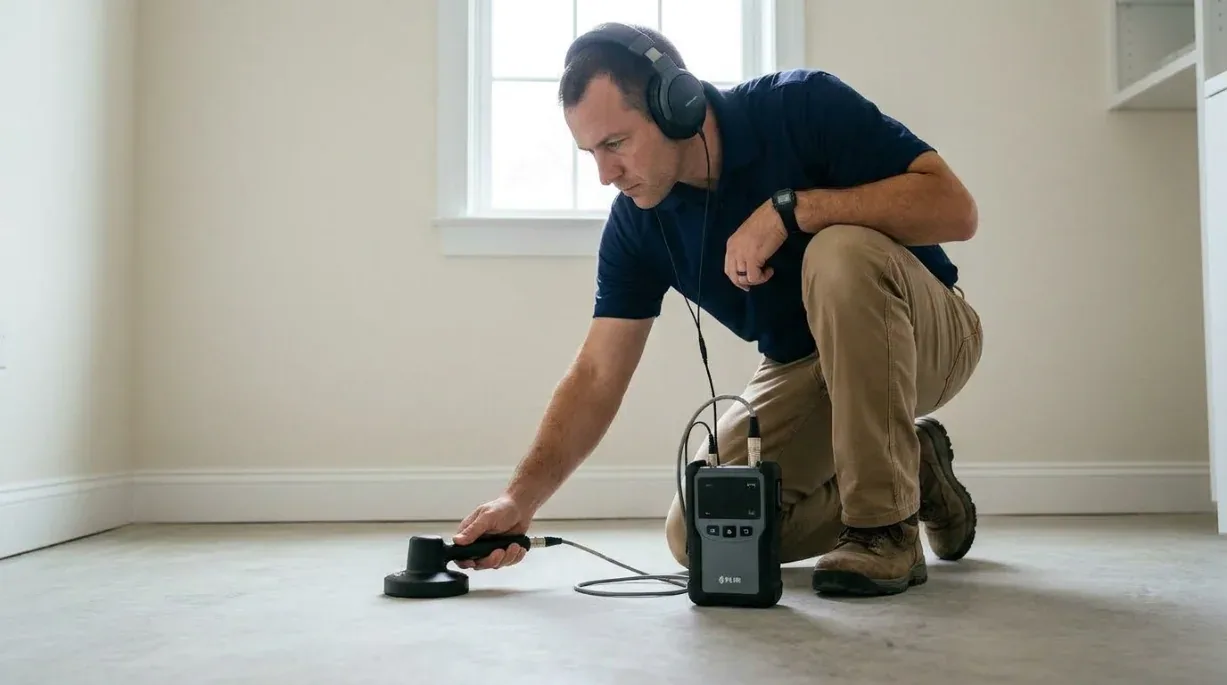
- Listen. Acoustic ground microphones and correlators pick up the high-frequency hiss of water escaping under pressure through concrete, soil and flooring.
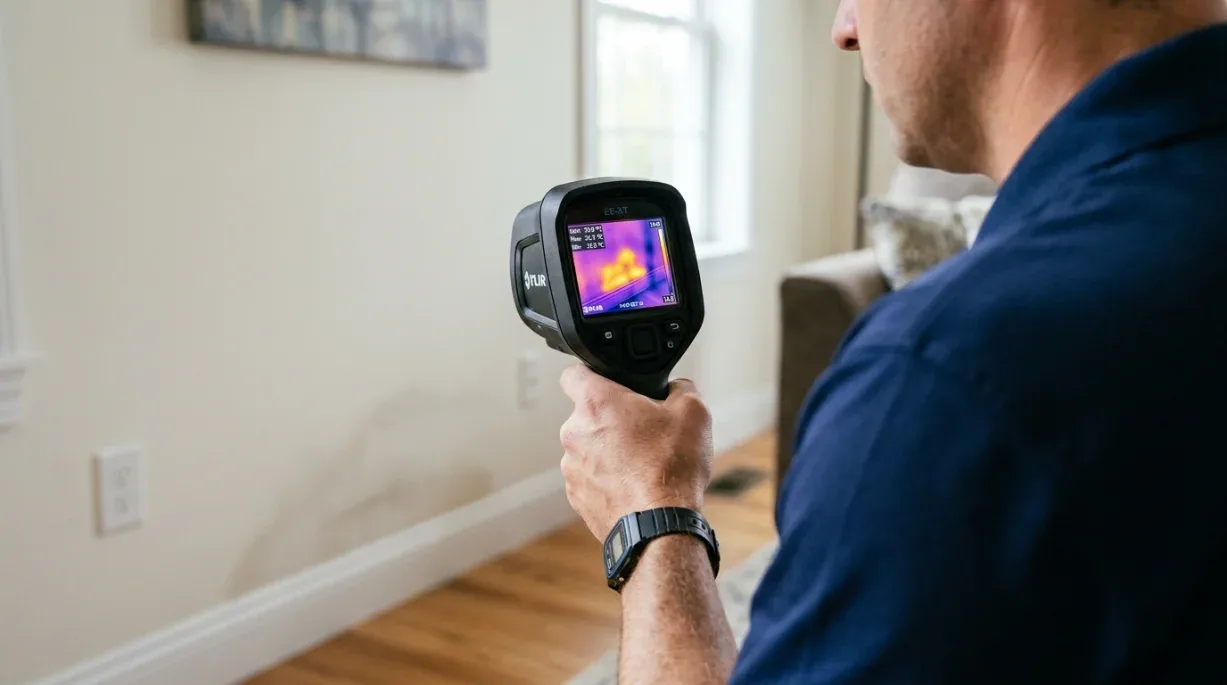
- Confirm with a second method. Thermal imaging shows temperature anomalies from hot water leaks; tracer gas finds leaks too small or too quiet to hear; a camera confirms drain line failures. The location is verified before the marking pen comes out.
What leak detection costs in the Marietta market
Leak detection in the Atlanta metro is normally sold as a flat diagnostic fee rather than an hourly rate, and that fee is separate from any repair. As a published local reference point, one metro Atlanta specialist lists a flat rate starting at $400 covering acoustic listening, thermal scanning, moisture detection and written documentation of the leak location.
Figures vary by leak type, access and how much isolation work is needed. Pool leak detection is usually priced on its own, and gas leak work is handled differently again because of the safety requirements. Always confirm three things before booking: what the diagnostic fee covers, whether it is credited against a repair, and what happens if no leak is found.
These are market ranges, not quotes. Prices on this site are compiled from publicly published sources for general guidance. Any professional you are referred to will quote their own fee directly.
High water bill? Marietta and Cobb County both offer leak credits
This is the part most homeowners do not know about, and it can be worth more than the detection itself.
Cobb County Water System offers a partial credit for eligible leaks once in a rolling 12-month period, applied to no more than two affected months. The county is explicit that the programme is "a partial offset of the costs associated with certain plumbing failures, not to fully compensate a customer for the costs of a leak." To apply you need your account address and number, a short explanation of the leak, and, critically, a plumbing repair receipt, a receipt for parts, or at minimum a letter explaining what was done to correct the problem. Pool leaks also require the pool volume. Applications go through the county's Customer Self-Service Portal, and you are expected to keep paying the bill while the claim is processed. Dripping faucets left running during freezing weather do not qualify.
Marietta Power & Water bills customers inside the city limits and operates its own separate leak credit process. If you are not sure which utility bills you, check the name on the bill itself: it determines which application you need to make.
Do not repair the leak without documentation. Both utilities need proof of what was wrong and what was done. Ask for a written report or invoice describing the leak and the repair before the work is closed out, without it, the credit application is much harder to support.
Will homeowners insurance pay for it?
Homeowners insurance usually pays only as part of a covered loss, not as a standalone inspection. If a leak has caused damage your policy covers, insurers commonly pay for locating the leak, gaining access to the pipe, and restoring what had to be opened. If you simply want the plumbing checked with no damage to claim, that is maintenance and generally is not covered.
The common exclusions to watch for are earth movement, and gradual deterioration or wear and tear, which is exactly how a slow pinhole leak can be characterised. Coverage for under-slab leaks specifically was pulled back by many carriers and later reintroduced as limited, optional products, so whether you have it depends on what was actually purchased. Read the policy, and ask your carrier before work begins.
Why Marietta homes leak the way they do
Three local factors explain most of what turns up here.
Pipe era. Marietta and the wider Cobb County area expanded heavily from the 1970s through the 1990s. That window covers polybutylene supply pipe, early CPVC, and copper run under slabs, three materials with well-documented, age-related failure patterns that are now all reaching the end of their service life at once.
Georgia red clay. The clay soil across this region expands when wet and contracts when dry. That seasonal movement puts repeated stress on buried service lines, sewer laterals and anything cast into or running beneath a foundation.
Foundation mix. Marietta is not a single foundation type. Slab-on-grade, crawlspace and full basement homes all sit within a few streets of each other, and each hides leaks differently. A basement home shows water quickly; a slab home can hide the same leak for months.
What to ask before you hire anyone
- Is the diagnostic fee flat, and what does it include? Get it in plain numbers before the visit, not after.
- What happens if you cannot find the leak? A clear answer here separates the specialists from the guessers.
- Will I get a written report of the leak location? You need this for a utility credit application and for any insurance claim.
- Are you licensed and insured in Georgia? Plumbing work in Georgia is licensed at state level through the Division of Master and Journeyman Plumbers. Ask for the number.
- Do you detect only, or detect and repair? Both models are legitimate. Knowing which you are dealing with tells you how to read the recommendation.
- How will you confirm the location before opening anything? A second confirming method is the difference between a small hole and an expensive guess.
Areas covered around Marietta
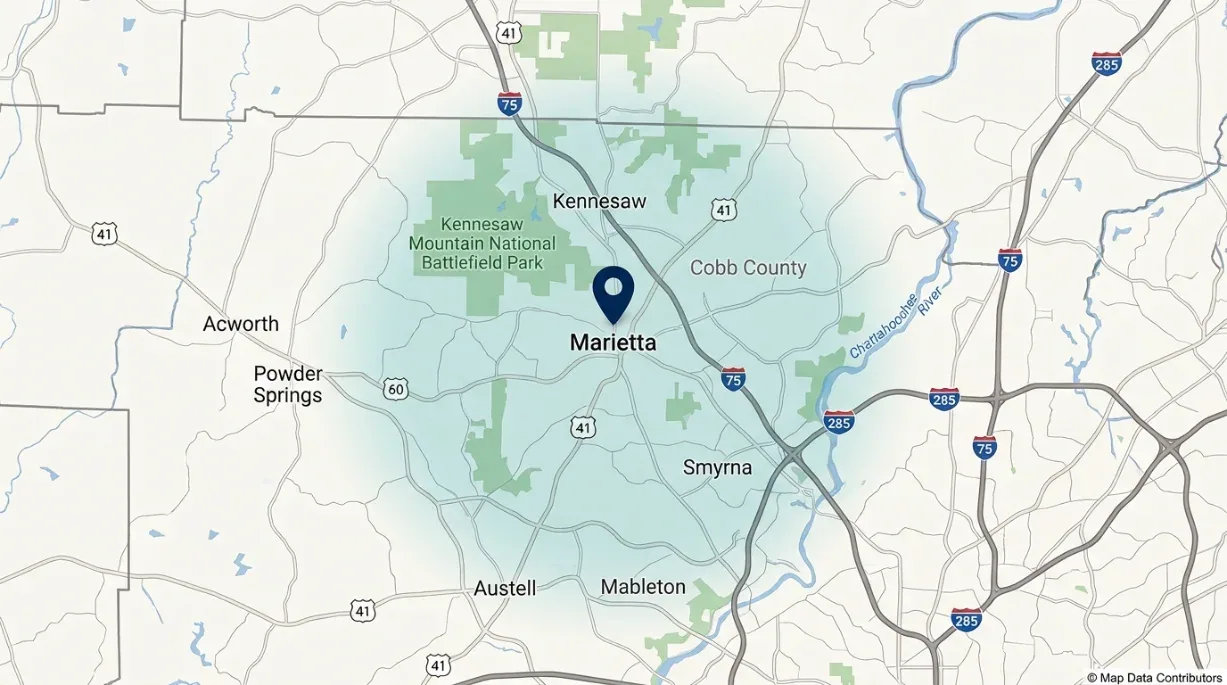
This resource covers Marietta and the surrounding Cobb County communities, including East Cobb, West Cobb, the Marietta Square area, Sandy Plains, Powers Ferry, Fair Oaks, Indian Hills, Sprayberry and Mountain View, across ZIP codes 30008, 30060, 30062, 30064, 30066, 30067 and 30068, along with nearby Kennesaw, Smyrna, Acworth, Powder Springs, Austell, Mableton, Woodstock and Roswell.
Frequently asked questions
How much does leak detection cost in Marietta, GA?
Leak detection in the Marietta area is normally charged as a flat diagnostic fee, separate from any repair. One metro Atlanta specialist publishes a flat rate starting at $400 that covers acoustic listening, thermal scanning, moisture detection and written documentation. Pool and gas leak work is usually priced separately. Ask what the fee includes, whether it is credited against a repair, and what happens if no leak is found.
How do I know if I have a hidden water leak?
Turn off every water-using fixture and appliance, then watch the low-flow indicator on your water meter. If it moves at all, water is escaping. Record the reading, wait one to two hours without using water, and read it again. Any change confirms a leak. Closing the main house valve and re-checking tells you whether the leak is inside the house or out at the service line.
Can a leak under a concrete slab be found without breaking the floor?
Yes. That is the entire purpose of professional leak detection. Pressure testing confirms which line is losing water, a line locator maps where the pipe runs, and acoustic ground microphones pick up the sound of water escaping under the concrete. Thermal imaging or tracer gas confirms the spot. Only then is a small section opened, rather than exploratory demolition.
Does Cobb County give a credit for a high water bill caused by a leak?
Yes, partially. Cobb County Water System offers a partial leak credit once in a rolling 12-month period, applied to no more than two affected months. You must submit your account address and number, an explanation of the leak, and a plumbing repair receipt, a parts receipt, or at minimum a letter explaining what was done to fix it. Pool leaks also require the pool volume. You must keep paying the bill while the claim is processed.
I am inside the Marietta city limits. Is my leak credit process different?
Yes. Homes inside the city are billed by Marietta Power & Water, not Cobb County Water System, and it runs its own separate leak credit process. Check the utility name printed on your bill to confirm which applies to you before you apply.
Does homeowners insurance cover leak detection in Georgia?
Generally only as part of a covered loss. If a leak has caused damage your policy covers, insurers commonly pay to locate the leak, access the pipe and restore what was opened. A standalone preventive inspection with no damage to claim is treated as maintenance and is usually not covered. Earth movement and gradual wear and tear are common exclusions. Check your own policy and speak to your carrier before work starts.
What is a slab leak and why are they common in Marietta?
A slab leak is a break in a water line running through or under the concrete foundation. They are common here because a large share of Marietta housing was built from the 1960s through the 1980s with copper supply lines run under the slab. Copper in contact with concrete and soil corrodes over decades, and Georgia's expansive red clay adds seasonal movement that stresses the pipe further.
My water bill jumped but I cannot see any water anywhere. Is that possible?
Very. A buried service line leak drains into the soil, a slab leak runs under the concrete, and an irrigation leak runs at night on a timer. None of them necessarily produce a visible puddle. The meter test is what settles it, because the meter measures everything passing onto your property whether you can see it or not.
Is my pool losing water from a leak or just evaporation?
Roughly a quarter to half an inch a day in summer is normal evaporation. Consistently more than that suggests a leak. The bucket test compares the pool's water loss with a bucket of water sitting on a step, so both lose water to evaporation at the same rate. If the pool drops faster than the bucket, you have a leak. Whether the loss changes when the pump is running helps identify which part of the system is at fault.
How long does a leak detection visit take?
Most residential visits take one to three hours. Simple confirmation on an accessible line can be quick; a slab leak in a large home with several isolation zones, or a pool with multiple plumbing runs, takes longer. Difficult access, background noise and unknown pipe routing are the main things that extend a visit.
Do I need a plumber or a leak detection specialist?
They overlap. A specialist focuses on locating the leak precisely and gives you documentation; a plumbing company locates and repairs. Both models are legitimate. If you already know where the leak is, a plumber is enough. If nobody can tell you where it is, or you have been quoted for exploratory work, a detection-first approach usually costs less overall.
What should I do first if I think I have a leak right now?
If it is gas, leave the building immediately and call 911 and your gas utility from outside. For water, close the main shut-off valve to stop the loss, then run the meter test to confirm and narrow it down. Photograph anything visible: damp patches, staining, the meter reading, because that documentation supports both a utility leak credit and an insurance claim later.
Does a leak have to be repaired before I can claim a water bill credit?
In practice, yes. Cobb County requires proof the problem was corrected, a plumbing repair receipt, a receipt for parts, or at minimum a letter explaining what was done. Ask for written documentation of the leak and the repair before the job is closed out, because obtaining it afterwards is considerably harder.
Are polybutylene pipes a problem in Marietta homes?
They can be. Polybutylene supply pipe, grey, sometimes blue outdoors, was installed widely in Georgia from roughly 1978 to 1995, covering a large part of Marietta's housing. It degrades internally and tends to fail at the fittings without warning. If a polybutylene home develops a leak, locating and patching that one point may only buy time, so the conversation is usually about the whole system rather than the single failure.
What happens if the technician cannot find the leak?
Policies differ by company, which is exactly why you should ask before booking. Some waive or reduce the fee, some do not. A specialist should at minimum be able to tell you what they ruled out, which narrows the problem even when the exact point is not found on the first visit.